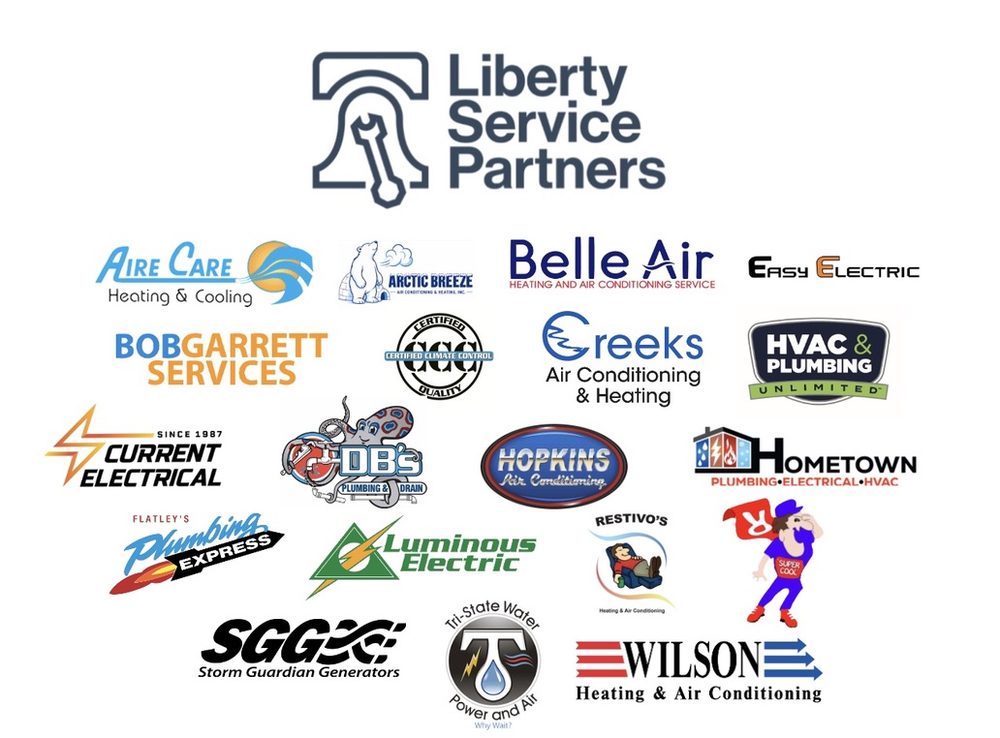
Liberty Service Partners is a private equity-backed platform that has rolled up a portfolio of established residential and commercial service brands across HVAC, electrical, plumbing, and standby-generator services. Headquartered in Addison, Texas, the company positions itself as a national leader in premium home services and operates as the parent of brands that have, in many cases, served their local markets for decades. What makes the platform worth studying isn't any single deal — it's the shape of the footprint, which maps almost perfectly onto where consolidation capital is most active in the trades today.
The footprint.
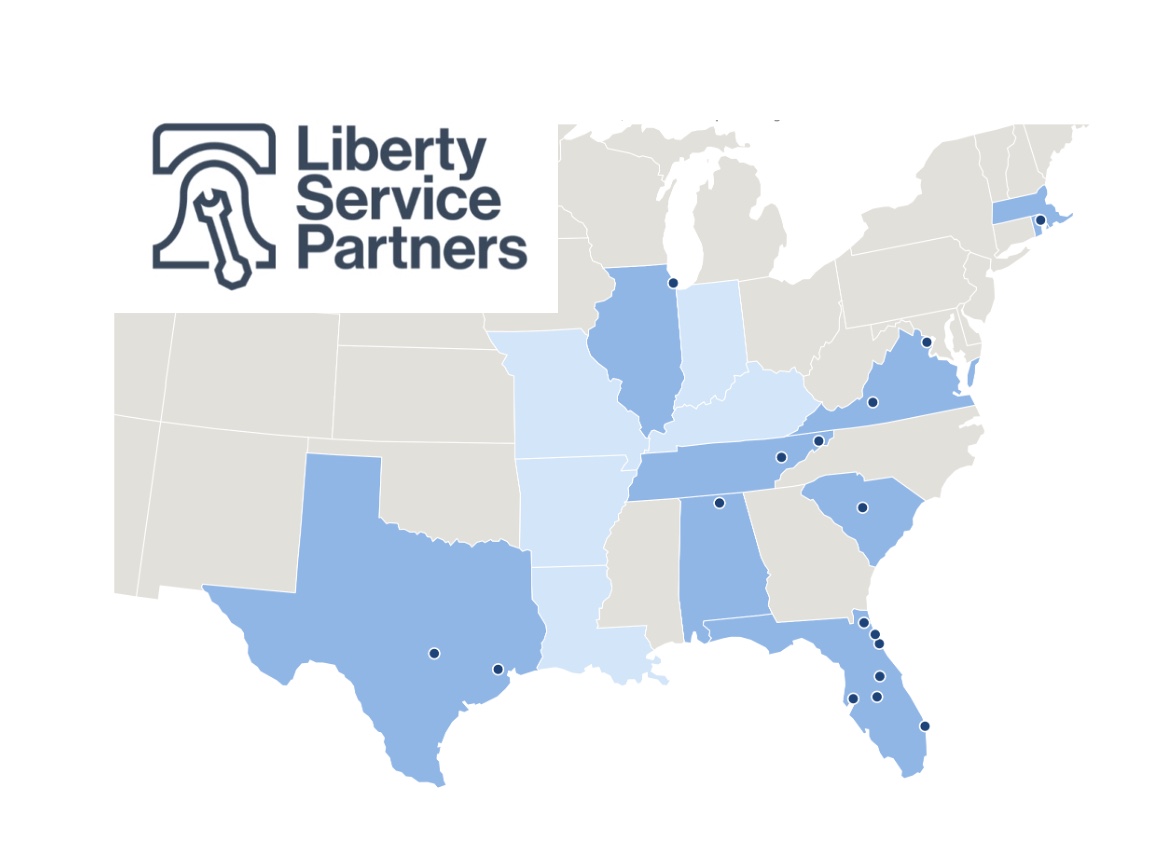
The geographic concentration is the most telling feature of the platform. Of the 19 brands, eight are based in Florida alone — Arctic Breeze (Palm Coast), Belle Air and Certified Climate Control (Orlando), Creeks Air (Jacksonville), Wilson Heating & Air (St. Augustine), Luminous Electric (Tampa), Hopkins Air (West Palm Beach), and Ridge Energy Savers (Lake Wales). Tennessee, Texas, and Virginia each contribute multiple brands, with the remainder scattered across Alabama, South Carolina, Illinois, and Rhode Island. The map below shades every state where Liberty has a directly headquartered brand, with the cities of each brand marked.
Why this map looks the way it does.
The Florida and broader Sun Belt weighting isn't an accident. These are the markets with the strongest tailwinds for residential service demand: population growth, aging housing stock, extreme cooling loads, and a high concentration of founder-owned contractors reaching transition age. For a platform builder, that combination is ideal — large, non-discretionary demand sitting underneath a fragmented supplier base of owner-operators who are increasingly open to a liquidity event. The footprint is a direct expression of where the buy-and-build math works best.
The multi-trade angle.
What sets Liberty apart from a typical single-trade roll-up is the deliberate bundling of HVAC, electrical, plumbing, and generators under one platform. Brands like Hometown (plumbing, electrical, and HVAC in the Tennessee Tri-Cities) and HVAC & Plumbing Unlimited (Northern Virginia) already cross trades within a single business, while Current Electrical and Storm Guardian Generators extend the platform into adjacent, recurring-revenue categories. This is the same logic driving the MEP consolidation wave on the commercial side: once you own the customer relationship and the dispatch infrastructure, adding trades increases wallet share without proportionally increasing customer-acquisition cost.
What it signals for owners.
For owners of HVAC, electrical, plumbing, or generator businesses — particularly in the Southeast and Sun Belt — a platform like Liberty is worth understanding on two levels. First, as a potential acquirer: these buyers typically preserve local brands and leadership while providing capital, back-office scale, and a path to liquidity. Second, as a market signal: when a sponsor is assembling density across a region and across trades, it tells you what institutional capital values right now — recurring service revenue, geographic density, scarce licensed labor, and the ability to bundle. Knowing where a platform already has a presence (and where it doesn't) is the difference between being a strategic tuck-in and being overlooked.
Own an HVAC, electrical, plumbing, or generator business?
Multi-trade platforms are actively building density across the Sun Belt and beyond. Whether you're considering a sale, weighing an acquisition, or just want to understand where you sit on the map, we work with owners and acquirers across the trades — no pitch, just an honest conversation about where you are.
Get in Touch →